The Image צֶלֶם
Start where the word lives
What is “the image of God”? Start with how tselem is used when nobody is being theological. It usually means a statue or an idol, a physical stand-in that represents its owner. Ancient kings set up their image in provinces they ruled but never visited. Now read day six again. God sets up his image, living ones, and the very same sentence hands them dominion.
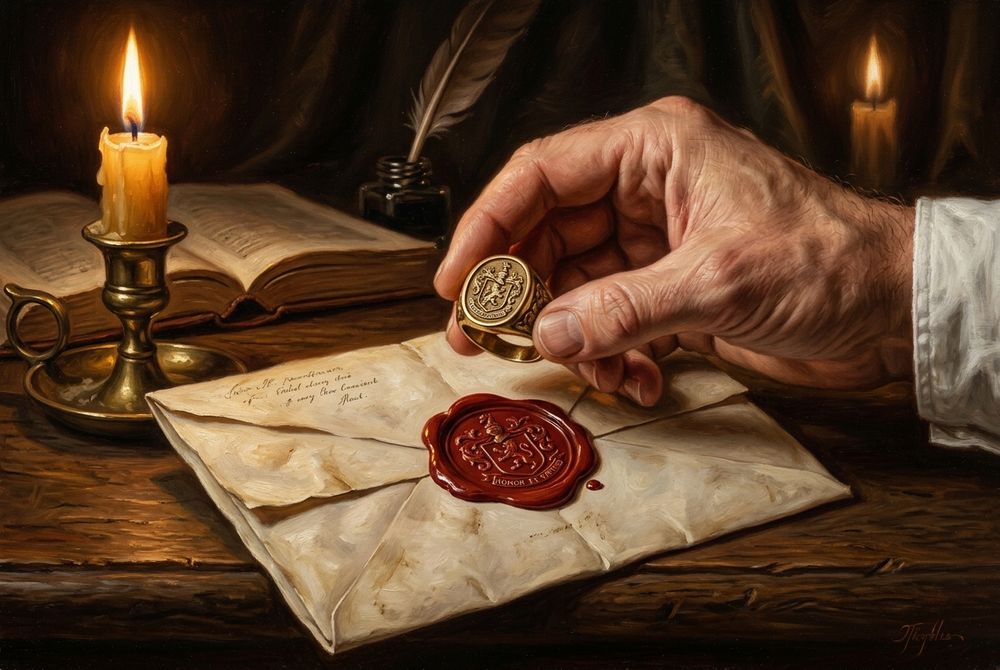
The king is not in the room. His ring presses his image into the wax, and the letter carries his authority anyway. An image is authority, standing in for its owner.
The verse’s own next move
Image comes first, and dominion follows in the same breath. The text spells the word out as an office: God’s representatives, ruling his world on his behalf.
Jesus’ coin runs on the same logic: the image marks whose a thing is. Caesar’s image means Caesar’s coin. He leaves the other half hanging in the air. You bear God’s image, so render yourself.
The image passes down a line, like a face. Sonship and image are one fabric in Genesis, which is why Luke can call Adam “the son of God.”
And when the image is renewed, what gets renewed? Knowledge here, and righteousness and holiness in the parallel in Ephesians. What Scripture renews reads like a calling.
Set up for whom?
A king’s statue isn’t for the king. It stands in the province, where the king isn’t, so the province knows whose rule it lives under. The image answers that kind of question: not what Adam was made of, but what he was set up for. Adam is placed in God’s garden-sanctuary as God’s living statue, so everything outside would meet the King’s rule in him and his line. And who was outside? Genesis raises the question on its own. Cain fears “every one that findeth me,” finds a wife, and builds a city (Genesis 4:14–17). Genesis doesn’t name them. Either way, the image faced outward.
The image, in person
Paul’s grammar is careful. Christ is the image; he doesn’t “have” one. The office was made to be filled in person. The invisible God has a visible face, and where a statue could only stand for the King, the Son shows him. From a signet in wax to a Son in flesh, the image was always headed here.
The Image stands beside Adam in Day 6’s corner of the sky.
Open the heavens →The image of God is something in human nature itself: the reason, conscience, and spirit that set people above the animals.
The image (tselem) is a royal office, God's living statue set up to represent his rule, which is why the same sentence hands out dominion.
The text never defines the image outright. This page reads its next move (“let them have dominion”) and the word’s usage. Scholars well outside this site’s camp (Middleton, Walton, Beale) read the image as royal-representative too. They are cited as witnesses to the vocabulary, not as supporters of this site’s conclusions. The old debates about body and soul are real discussions; they are simply not this page’s claim. When Paul calls Christ the image, that title may carry more than an office. The office reading is claimed for Genesis 1, not as a ceiling for Christ.